I took a look at Wikipedia’s Neptune page and found this intriguing paragraph:
Some of the earliest recorded observations ever made through a telescope, Galileo Galilei‘s drawings on 28 December 1612 and 27 January 1613 contain plotted points that match up with what is now known to have been the positions of Neptune on those dates. On both occasions, Galileo seems to have mistaken Neptune for a fixed star when it appeared close—in conjunction—to Jupiter in the night sky. Hence, he is not credited with Neptune’s discovery. At his first observation in December 1612, Neptune was almost stationary in the sky because it had just turned retrograde that day. This apparent backward motion is created when Earth’s orbit takes it past an outer planet. Because Neptune was only beginning its yearly retrograde cycle, the motion of the planet was far too slight to be detected with Galileo’s small telescope. In 2009, a study suggested that Galileo was at least aware that the “star” he had observed had moved relative to the fixed stars.
Wikipedia: Neptune
Of course, I could not resist calculating the chart for this particular day. Since this is again a visual overview, I will comment on this chart elsewhere.

A very recent addition to the arsenal here is the Galactic Centre. Since there are a lot of very interesting events with an aspect to the not yet born “Mars in the Independent chart”, I have found the Galactic Centre as an alternative hypothesis.
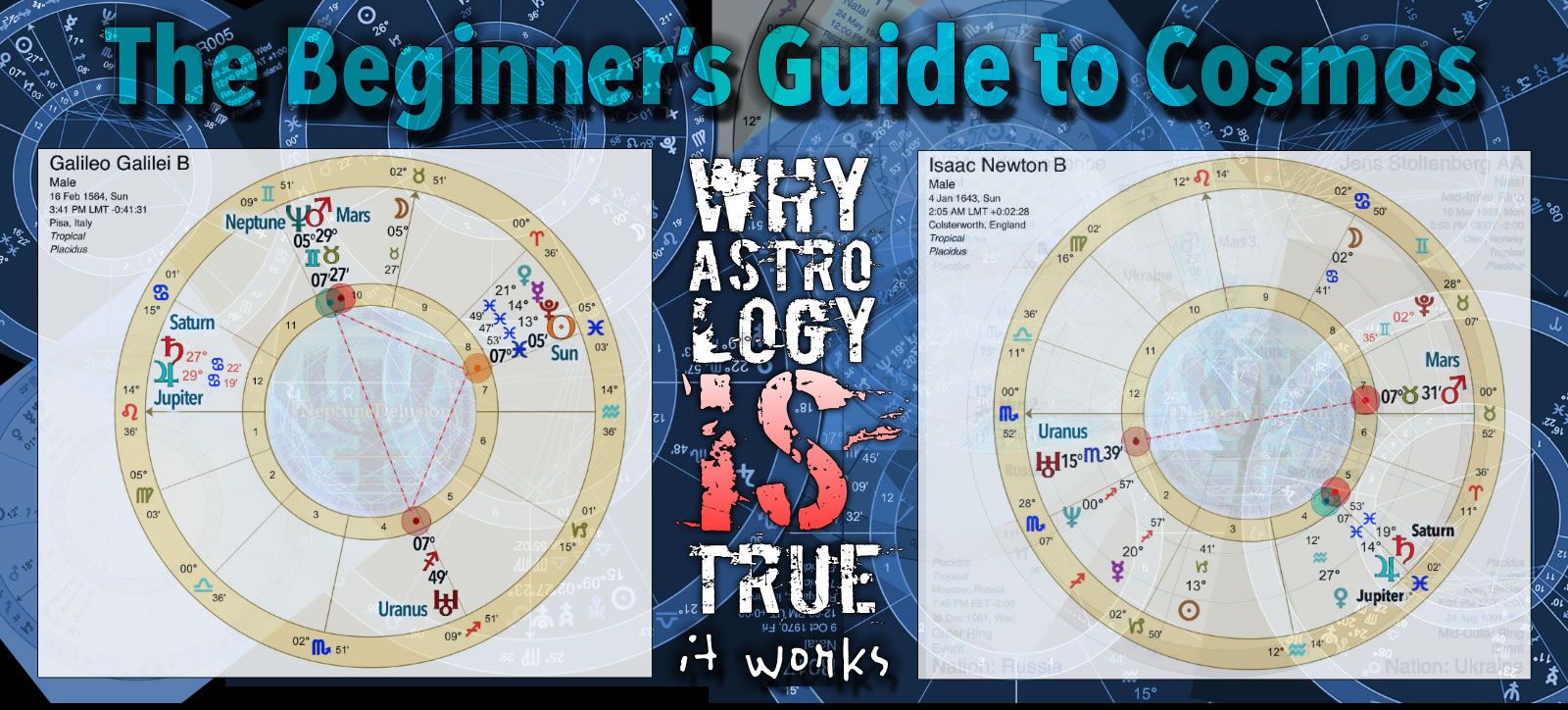
What I have to point out, though, is Galilei’s spectacular Uranus and Neptune opposition, including the Sun and Mars.

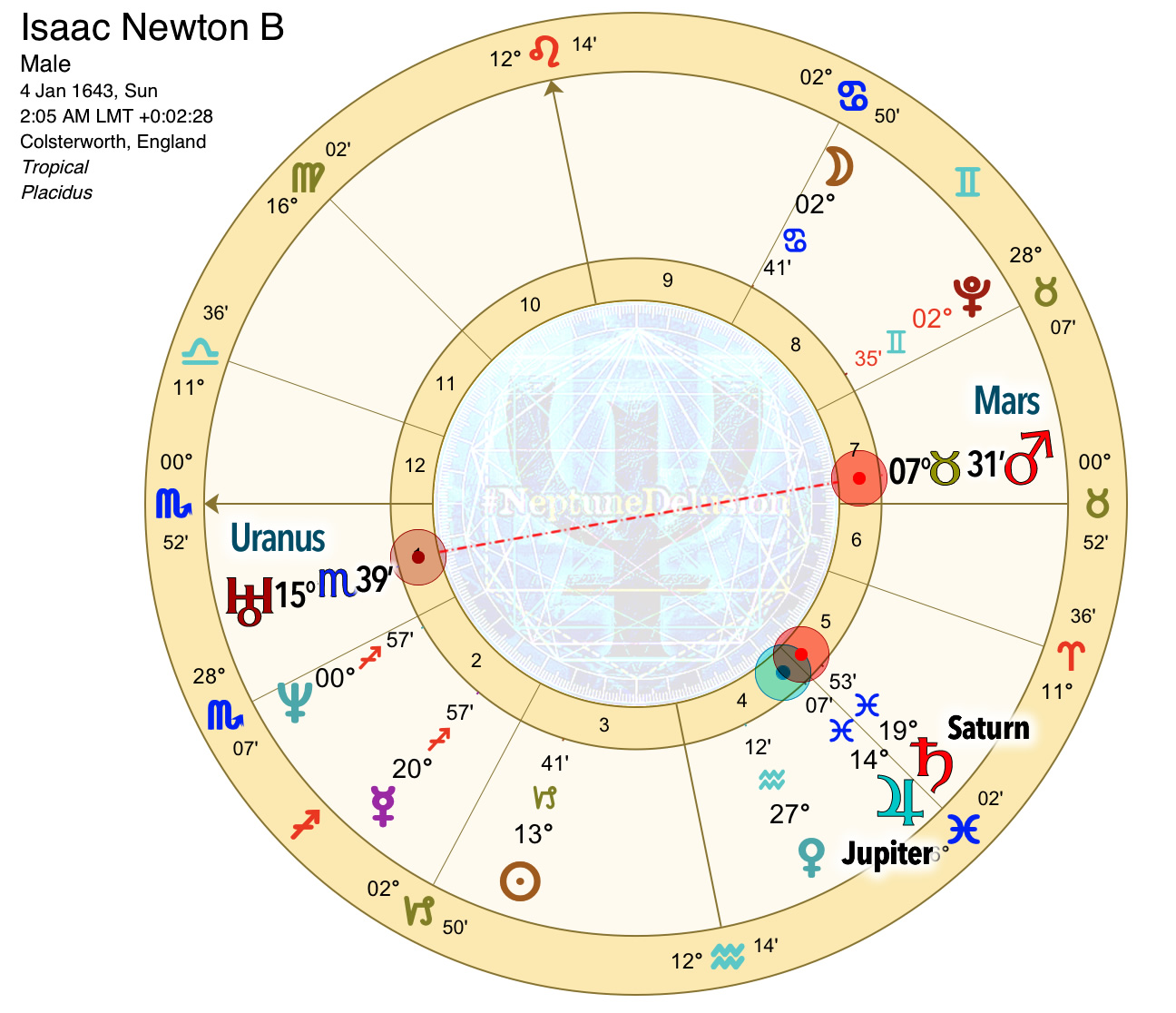
Yet another of these improbable coincidences is to find most of the important founders of the new scientific paradigm have charts with a prominent Uranus.