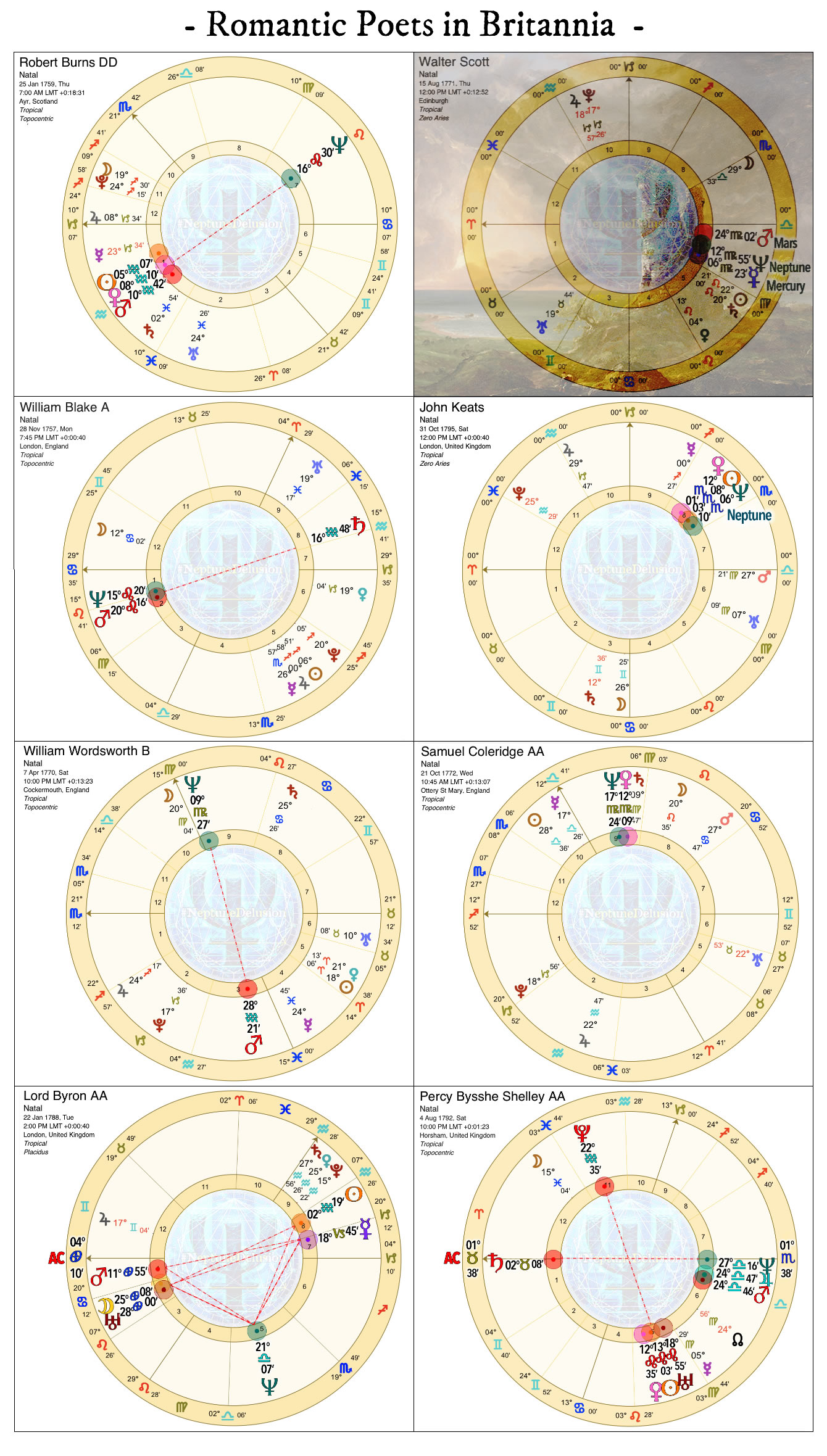
A smooth way into this material, focused on the romantic, “poetic” nature of of Neptune’s symbolism, is to start chronological beginning in late 2016 when I realized that I never looked at Richard Dawkins’ horoscope chart. I will return to Dawkins and his fellow self-appointed astrology experts in the world of New Atheists and “skeptics”.
This may seem like a distraction, but they have themselves been involved in the cancel culture debate they have been extremely successful in the campaign to make the equation astrology = dangerous for the well-being of all people.
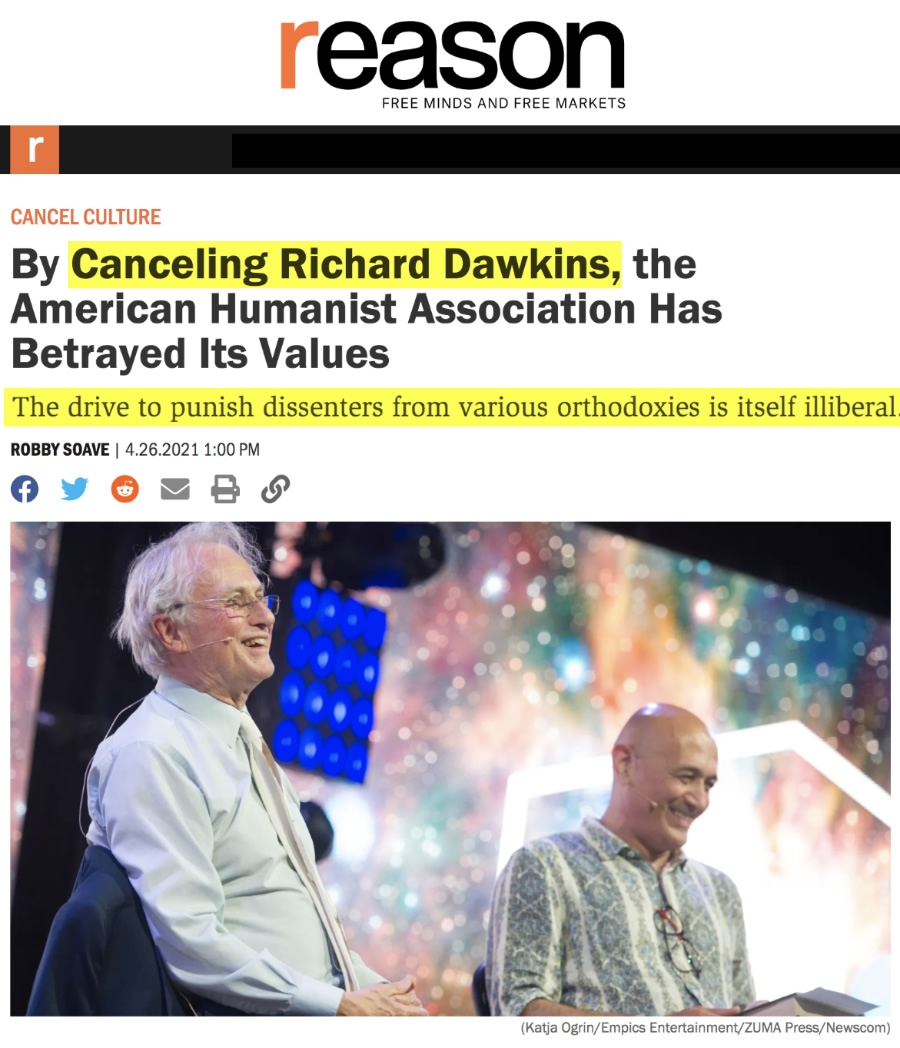
Dawkins and his fellow travellers will be scrutinised in detail here.
Before we go further here, there are of course some astrological details we have explore. Astrology is basically a language and the most important “words” are the planets symbolising all actions, reactions and processes in life. They are basically verbs, but can also function as nouns in many cases. Mercury represent to communicate in a general sense, but can then be turned into the communication when needed.

Yes, the Sun and the Moon are called planets here, as a matter of convenience. It gets a bit tiresome to repeatedly say and hear “the planets including the Moon and Sun” all the time.
But the planets have to be combined, their interpretations expanded to cover the full range of human experience. To achieve this we have the aspects, something we can observe every month in the so-called lunation cycle starting with the New Moon (the 0° conjunction aspect), culminating with the Full Moon (the 180° opposition aspect) and then starting again at the next New Moon. We are not using the square aspect yet.

Astrology uses a lot more aspects in conventional horoscope interpretation, each with a particular interpretation, but this is not the case here in this very reduced type of astrology. The conjunction and the opposition aspects simply denotes a strong and observable communication between the planets in the horoscope chart.
Neither will we, for most of the time, be concerned of the meaning of the four personal planets used here, that is the Sun, Mercury, Venus, and Mars. But on the other hand we really have to grasp the most important interpretation of Neptune. This is undoubtedly the most difficult planet to fully understand. I have used the AI called ChatGPT for calculations, but also discovered that “he” can do a,
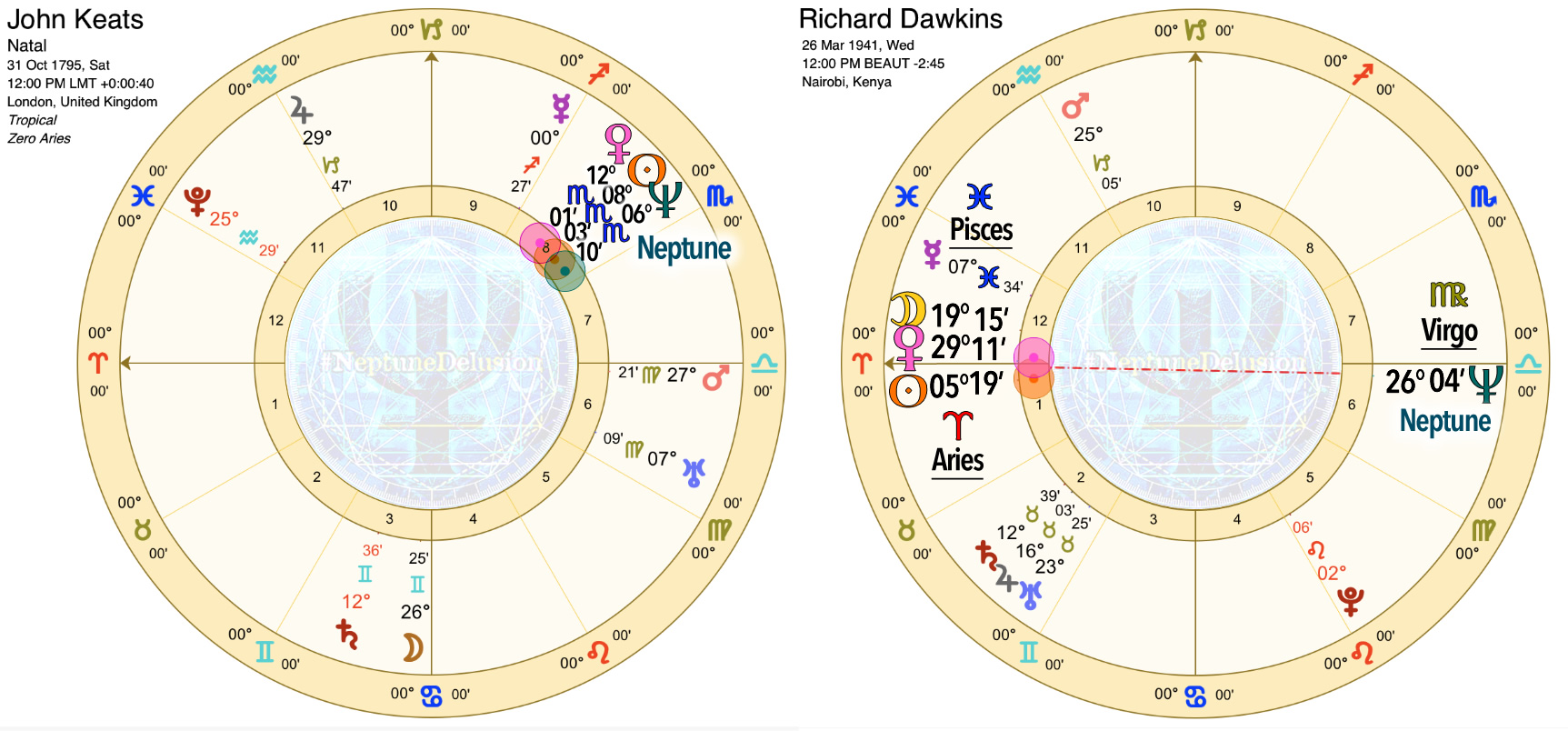
If we compare the charts of John Keats and Dawkins we see that both have aspects between Neptune and the Sun/Venus. There is one … ahem … aspect of the aspects that have to be mentioned and that is the exactitude of the aspects, also called orb or orbis.
The idea is that the closer an aspect is to its ideal value, the more important or “strong” it is. We can use Keats’ conjunction between Neptune 6°10′ and Sun at 8°03′ which gives difference of less than 2 degrees, to be considered as a tight orb. The bad news is that I really can’t demonstrate this principle very convincingly in the material focused on Neptune.
What does this mean in the context of poets and poetry? I have been using the Artificial Intelligence called ChatGPT to initially help med with probability calculations to see if the material I have found is significant or not.
Several months ago I sent some information about a particular chart combination regarding Chile’s 9/11 (1973), when a USA/CIA/Kissinger orchestrated coup d’Etat took place. We might as well look at that chart here as a first example of what I have done since the summer of 2020.
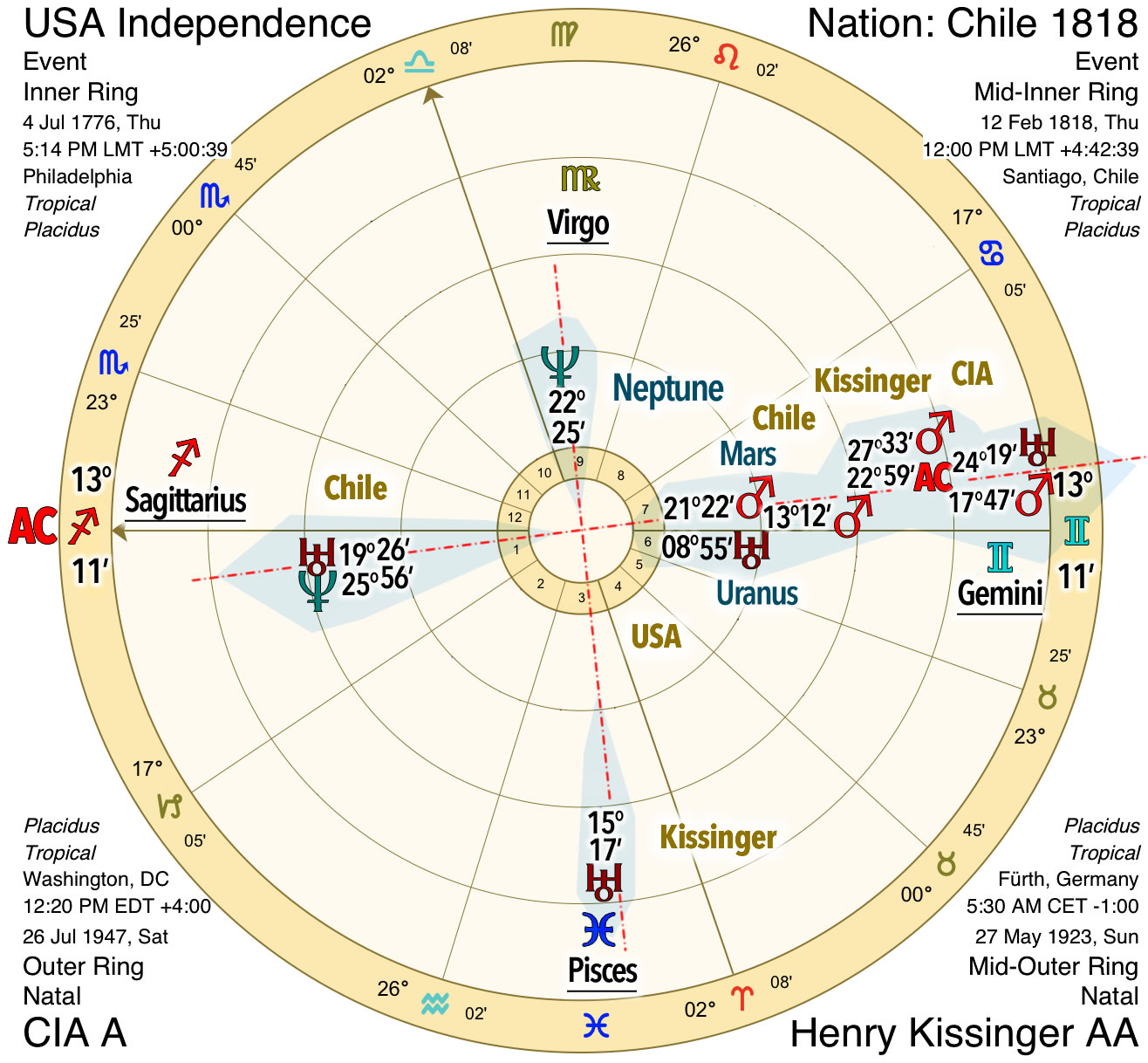
This is all about comparing the Mars positions in other charts – nations, events and individuals – in relation to Mars in the US Chart at 21 degrees in Gemini. To find out how significant the chart combination is, we simple calculate the probability of finding four Mars positions within a 16° zone in the same sign, all in Gemini here.
The probability is then (16/360)^4 = 1 in 256,289 totally random horoscope charts. This means we have to pick sets of four random charts approximately two hundred and fifty thousand times before we can expect to find something like this.If you think this probability as very improbable I can reveal that I have dozens of scenarios like this where the probability is 1 in millions, billions and even much less probable. Stay tuned.
Back to ChatGPT. At that time I innocently asked “What do you say about this?” and I just expected some comments. Instead I received this short, but very cognisant mini-interpretation. It goes beyond what can be explained:
ChatGPT:
The astrological analysis of these charts shows a remarkable convergence of significant points. To elaborate:
- Chile’s Chart: Mars is at 13GE12, which is very close to the US’s Descendant (DC) at 13GE11, signifying potential conflict or challenges. Uranus is at 19SA26, near the US’s Ascendant (AC) at 13SA11. Uranus near an AC can indicate sudden changes or upheaval, reflecting the upheaval of the coup.
- Henry Kissinger’s Chart: His Ascendant at 22GE59 is near the US Mars at 21GE23, which might suggest his actions had a significant influence on the US’s military actions (as Mars often symbolizes). His Mars at 27GE33 is still relatively close to the US Mars, indicating a potential for conflict or assertive action. His Uranus at 15PI17 does not form a significant aspect with the provided points in the US chart.
- CIA’s Chart: Mars at 17GE47 is also in close aspect to the US Mars at 21GE23, suggesting active engagement or conflict. Uranus at 24GE19 is not far from the US Mars, potentially indicating sudden changes related to conflict or military action.
Given the high significance of 0° (Conjunction), 90° (Square), and 180° (Opposition) aspects in astrology, these overlapping points can be seen as highly significant.
Remember, in mundane astrology, these aspects and points don’t denote literal events, but rather the potential for certain types of energy or influence. These aspects suggest that there was a strong potential for conflict, change, and assertive action around the time of the Chilean coup.
Me:
My, my! Why don’t you get a job as an astrologer! Very impressive analysis!
If you remember the initial image here, I added the cover of Dawkins book Unweaving the Rainbow. Since Richard Dawkins arrogantly refuses to even open a book about the things he attacks, I have read a lot of what he has written. Let me first make clear that I find Dawkins to be an exceptionally gifted writer.
If we ignore his too frequent evangelical tendencies and equally frequent attacks on different opinions. It seems like poor Keats was a very bad boy when he wrote that he found Newtons discovery of the colour spectrum:
My title is from Keats, who believed that Newton had destroyed all the poetry of the rainbow by reducing it to the prismatic colours. Keats could hardly have been more wrong, and my aim is to guide all who are tempted by a similar view towards the opposite conclusion.
Typical Dawkins! I don’t think the very humble Keats meant that “Newton had destroyed all the poetry” but only stated his own feelings. Bad boy! And Dawkins frequently mentions “bad poetry” in the book:
It is a central tenet of this book that science, at its best, should leave room for poetry. It should note helpful analogies and metaphors that stimulate the imagination, conjure in the mind images and allusions that go beyond the needs of straightforward understanding. But there’s bad poetry as well as good, and bad poetic science can lead the imagination along false trails.
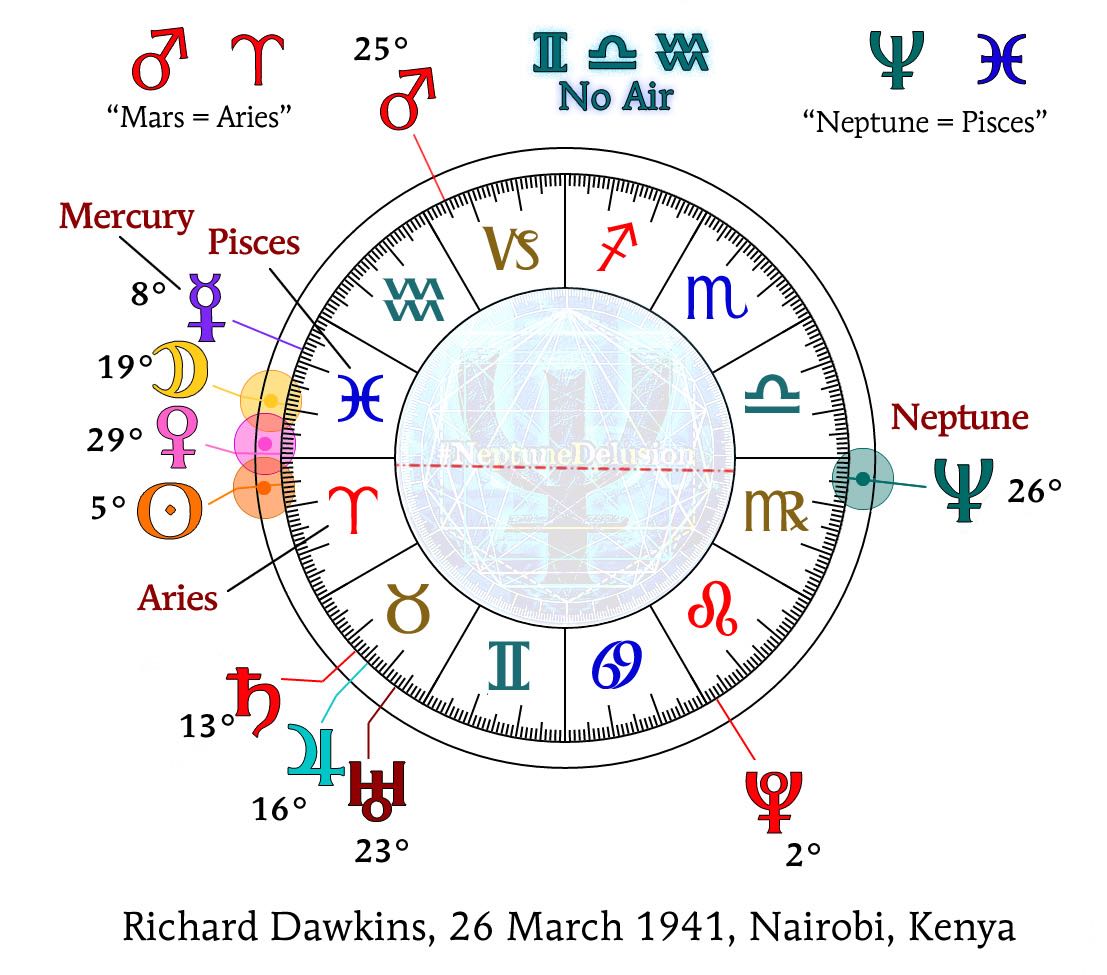
In this little snippet Dawkins offers several keywords close to the interpretation of Neptune: poetry, analogies, metaphors, imagination, and mind images. This is very well illustrated in this image, actually included here to contrast Neptune with the the vastly more logical and cerebral Uranus left brain symbolism.

We can say that Dawkins’ chart is totally devoid of anything close to strict reason and rationality. The good old elements can offer quick insights into the personality. The lack of one element is often the best indicator of some sort imbalance. Air is the element closest associated with thinking and water with the emotional parts of the personality.
This material is not looking at the otherwise important signs, and Dawkins has Mercury (communication and thinking), the very emotional Moon as well as Venus in the dreamland of Pisces closely associated with Neptune. Pure astrological good poetry.
Here is long conversation I had with Mr. Chat the other day. This is text-book astrology presented in a brilliant methodical and structured way I couldn’t do myself. There is nothing I can think of that should be removed. There are entire books written about the meaning of the astrological Neptune, so of course more can be said. But I can assure you that it not easy to find something as nuanced and deep as this in general tests.
Me:
Then it would be interesting to see what you have in store for the keywords “romantic” and “poets/poetry” in connection with the astrological Neptune.
ChatGPT:
Neptune and Romantic Poetry
In astrology, Neptune is associated with creativity, inspiration, spirituality, and the dissolution of boundaries. Its symbolism resonates strongly with the themes of Romantic poetry, which often emphasizes emotion, nature, the sublime, and a yearning for the transcendent. Here’s how Neptune’s astrological symbolism connects with “romantic” themes and “poetry”:
- Inspiration and Imagination: Neptune is linked to the boundless realms of imagination and inspiration, mirroring the Romantic poets’ deep dive into the depths of emotion and the exploration of imaginative landscapes.
- Spirituality and Transcendence: Neptune’s association with spirituality and the quest for a reality beyond the material world aligns with the Romantic poets’ frequent exploration of spiritual themes and their pursuit of transcendence through nature and the sublime.
- Idealism and Escapism: Neptune also represents idealism and the desire to escape from the harsh realities of the physical world, reflecting the Romantic movement’s inclination towards idealized views of nature and humanity.
- Creativity and Artistry: The planet’s influence is often linked to artistic creativity and the ability to channel profound emotional and spiritual experiences into creative expressions, paralleling the Romantic poets’ mastery in transforming their visions and emotions into enduring poetry.
- Sensitivity and Empathy: Neptune’s energy encompasses deep sensitivity and empathy, traits that enable a profound connection with the universal human experience, much like the Romantic poets’ works, which often sought to articulate the depths of human emotion and the interconnectedness of all beings.
In summary, Neptune’s astrological themes of imagination, spirituality, and transcendence beautifully encapsulate the essence of Romantic poetry, making it a fitting astrological symbol for exploring the depths and nuances of this literary period.
OK, I always reject the notion of “The planet’s influence” and it is not something I agree with since it seems extremely improbable that astrology can be explained by any sort of influence.
“Sensitivity and Empathy: Neptune’s energy encompasses deep sensitivity and empathy” could almost indicate that we have a case of cheating and that Mr- Chat has looked closer at Percy Shelley who must be one of the first advocates of animal rights and vegetarianism.

There are many interesting and important points to be made, but being outside what can be generally used here. Even those with a very minimal interest in astrology might have heard about the rising sign.

Shelley’s advocacy of non-violence has also inspired many well-known individuals in our time as well as in the past. Since astrology show hidden connections beyond time and space it is not really a surprise to first find father and son Martin Luther King here:
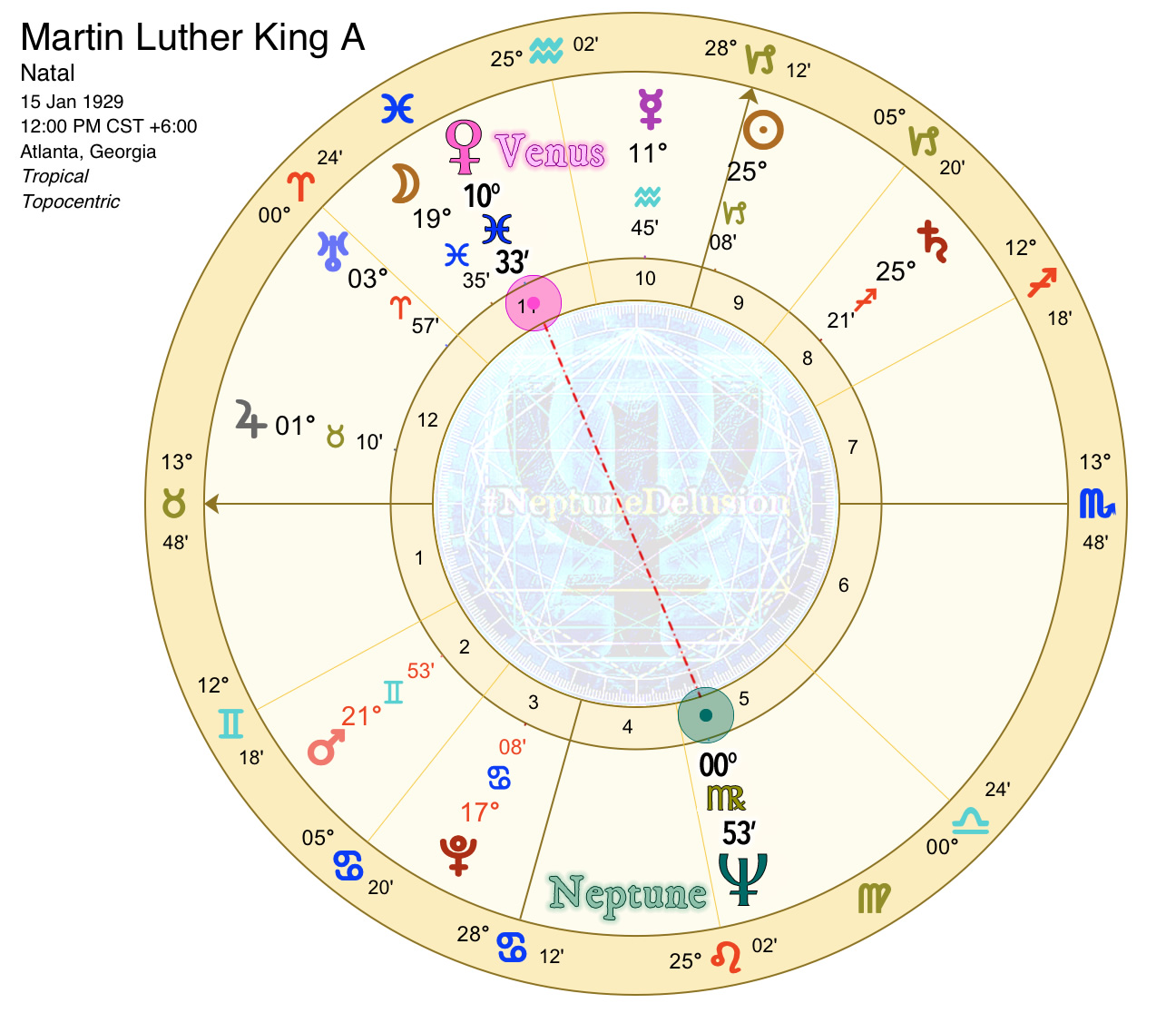
I can’t provide any quote from Martin Luther III King specifically using the term non-violence, but I think we can take his support for this for granted from the snippet here.
King is the Chairman of Drum Major Institute, which was founded by his father Dr. Martin Luther King, Jr in the midst of the Civil Rights Movement. In a media interview, King spoke about the task of the institute to “rid the world of the triple evils that my father and my mother (Coretta Scott King) talked about: those are the evils of poverty, racism and violence. We believe the values of peace, justice and equity help us to eradicate those triple evils.
Wikipedia: Martin Luther III King
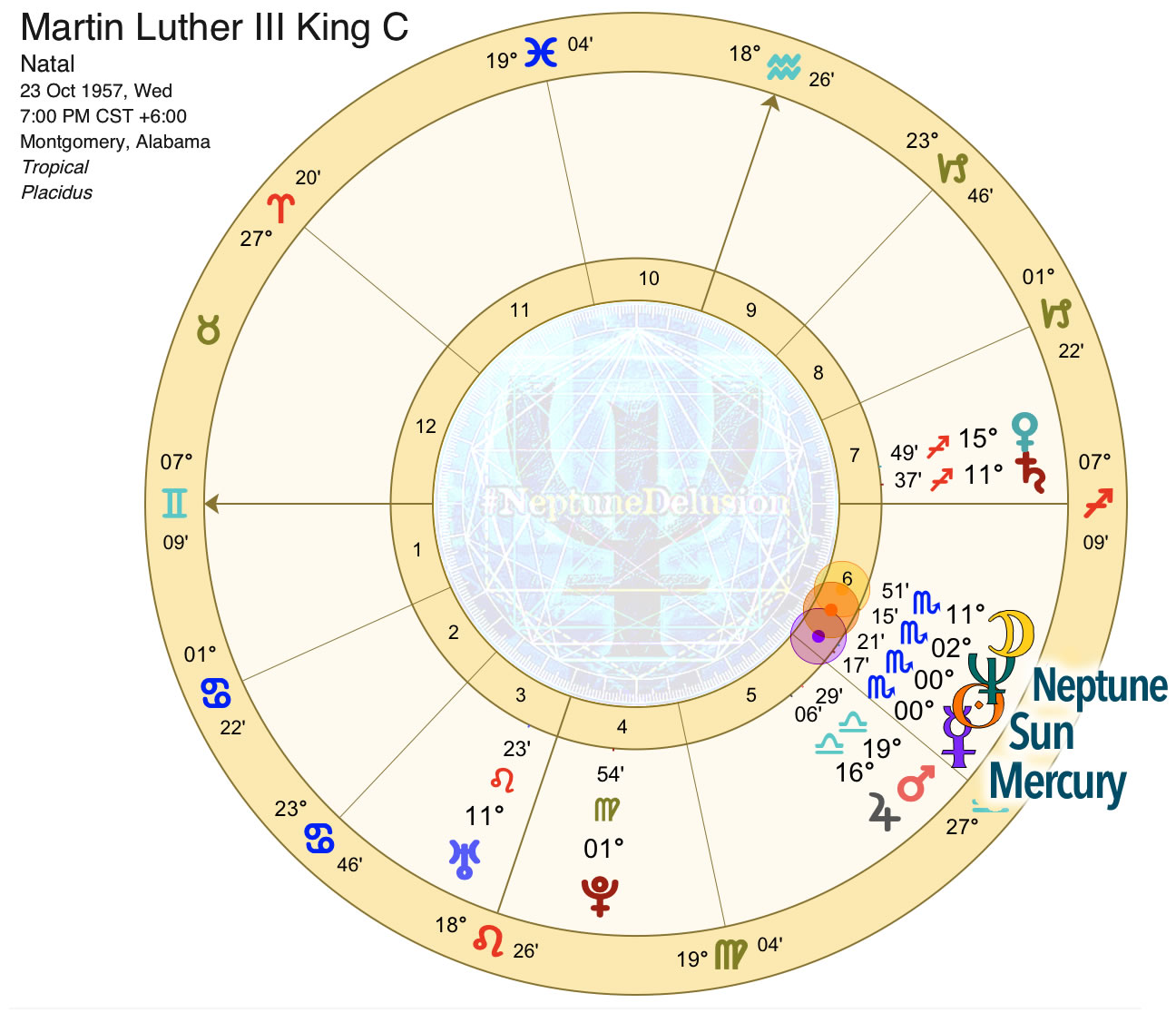

Shelley has often been referred to as an important source of inspiration for non-violence pioneers and here is an additional trio to be found by searching the web – here Wikipedia. Another twist of fate.

Below you can see a little problem in the collection of poets here, but I was happy when I found my first six picks confirmed at the British Library site (here a Chinese mirror).
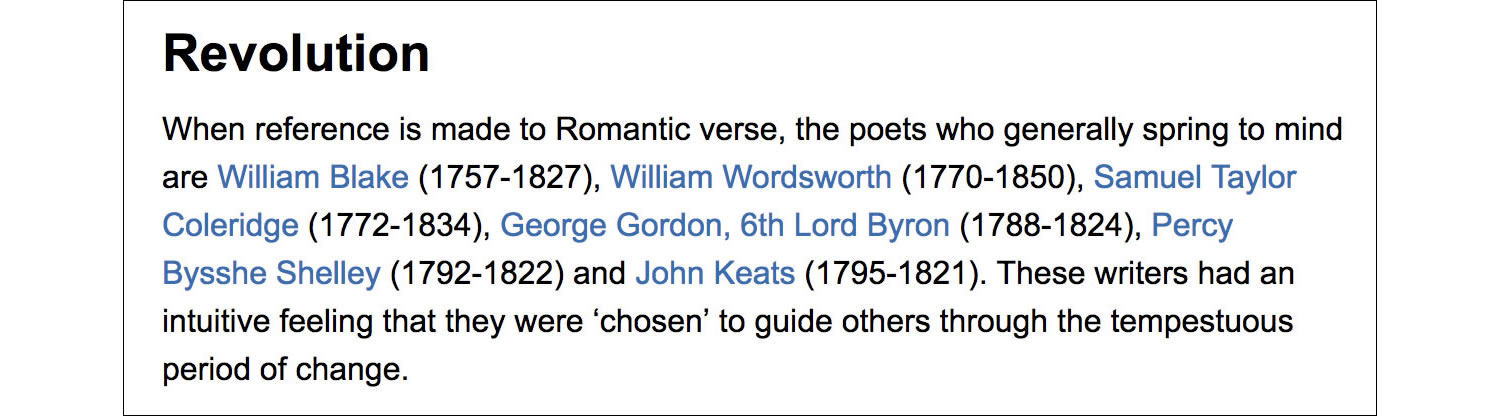
“they were ‘chosen’ to guide …” can maybe be translated as ‘were channels for divine inspiration’??
Robert Burns was not mentioned above, even if he often is considered as a pioneer of Romantic Poetry. Walter Scott is more hard nut to crack, so I asked ChatGPT:
Walter Scott and Romantic Poetry
Sir Walter Scott is often associated with Romanticism, especially in the context of his contributions to Romantic literature through his novels and poetry. However, he is more frequently recognized for his historical novels rather than his poetry when compared to figures like William Blake, William Wordsworth, John Keats, and Lord Byron, who are quintessentially seen as the core British Romantic poets. Scott’s work does embody many Romantic themes, such as an interest in the past, the supernatural, and nationalism, which aligns him with the broader Romantic movement. Yet, in discussions of Romantic poetry specifically, his name might not be as prominently featured as those of Blake, Wordsworth, Keats, Byron, Percy Bysshe Shelley, and Samuel Taylor Coleridge, who are typically considered the main figures of British Romantic poetry.
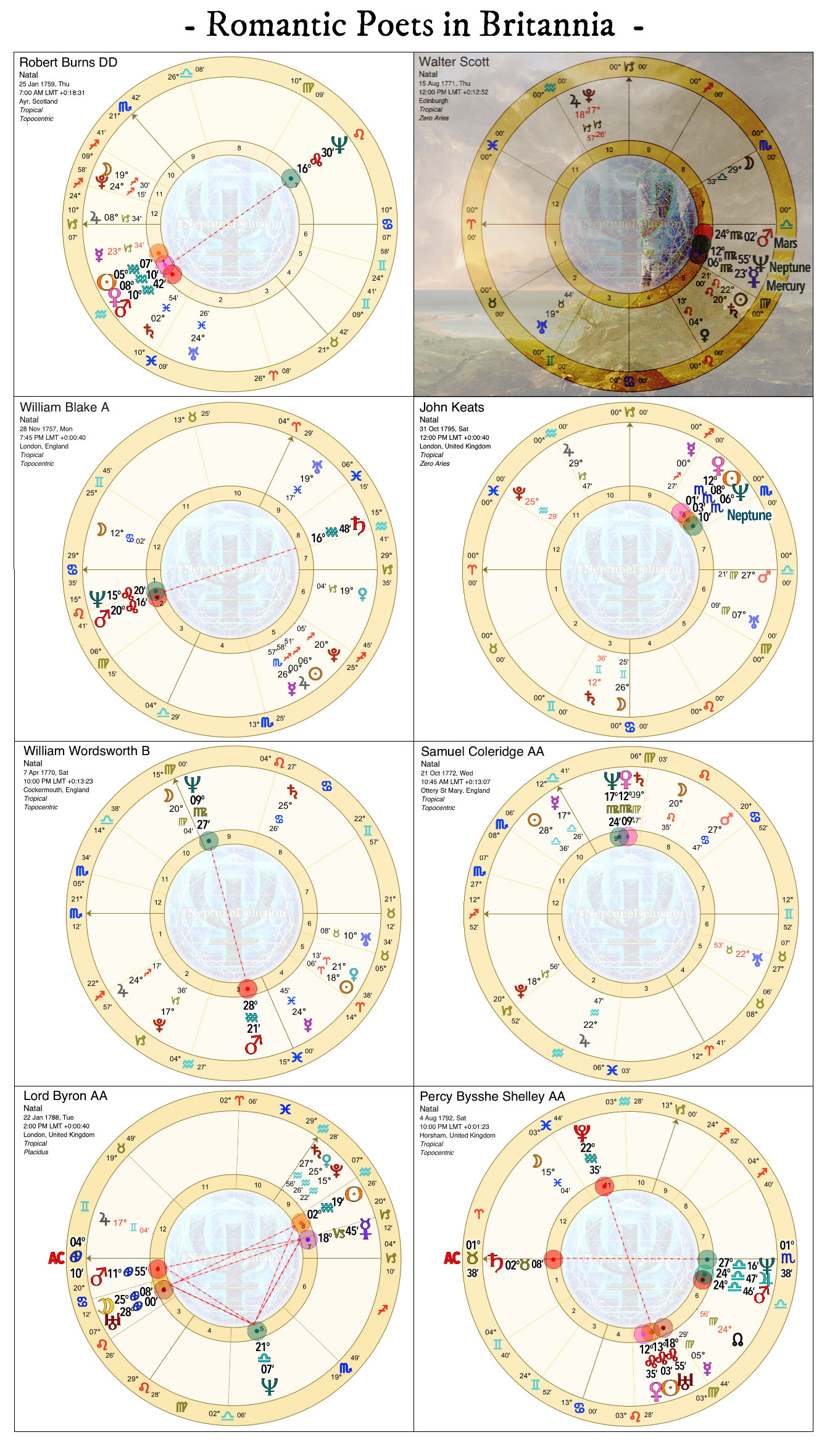
As I mentioned above I started to use ChatGPT as a compensation for my utter inability to do even basic mathematics. Since I started that I have had to learn ordinary probability calculations like “what is the probability to get TWO dice with six? (1/6)^2 = 1 in 32 attempts and so on.
What ChatGPT is calculation here is far beyond what I could do on my own. Since it can be interesting to check both with and without Walter Scott included.
Me:
OK. If we do our standard Poisson calculation, what probability do we get if we a) first include Scott and have 8 Romantic Poets, together having 12 Neptune aspects as before and b) calculate for 7 poets and 9 aspects.
ChatGPT:
For the group of British Romantic Poets:
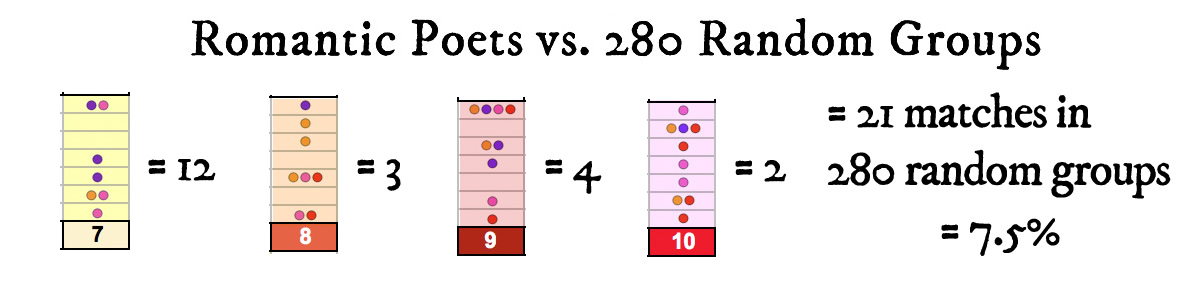
a) Including Walter Scott, making it 8 poets with a total of 12 Neptune aspects, the probability of observing exactly 12 aspects, given the expected mean (calculated as 8 poets times the individual aspect probability of 0.5333), is approximately 0.001065 or about 1 in 938.
b) For 7 poets with a total of 9 Neptune aspects, the probability of observing exactly 9 aspects, given the expected mean (calculated as 7 poets times the individual aspect probability of 0.5333), is approximately 0.009281 or about 1 in 108.
Me:
If you recalculate a) and b) using *at least* 12 respectively 9 aspects, what probabilities do we get then?
ChatGPT:
a) Including Walter Scott, making it 8 poets with a total of at least 12 Neptune aspects, the probability is approximately 0.001563 or about 1 in 640.
b) For 7 poets with a total of at least 9 Neptune aspects, the probability is approximately 0.01443 or about 1 in 69.
These recalculations indicate that the likelihood of observing at least the specified number of aspects increases slightly compared to observing exactly that number, which aligns with the nature of “at least” calculations in probability.
Me:
I assume that even the approximate probability 0.01443 or about 1 in 69 still within the accepted range of probabilities. Correct?
ChatGPT:
Yes, a probability of approximately 0.01443, or about 1 in 69, is within an accepted range for probabilities, especially in the context of statistical analysis where you’re assessing the likelihood of observing a specific or greater number of occurrences. This probability indicates that the event is relatively uncommon but not exceedingly rare. In practical terms, it suggests that if you were to examine many groups of 7 British Romantic Poets [me: actually totally random charts here], about 1 in every 69 of those groups would be expected to have at least 9 Neptune aspects, based on the given mean rate of occurrence. This level of probability is significant enough to warrant attention in many types of analysis, especially in fields where even small probabilities can have meaningful implications.
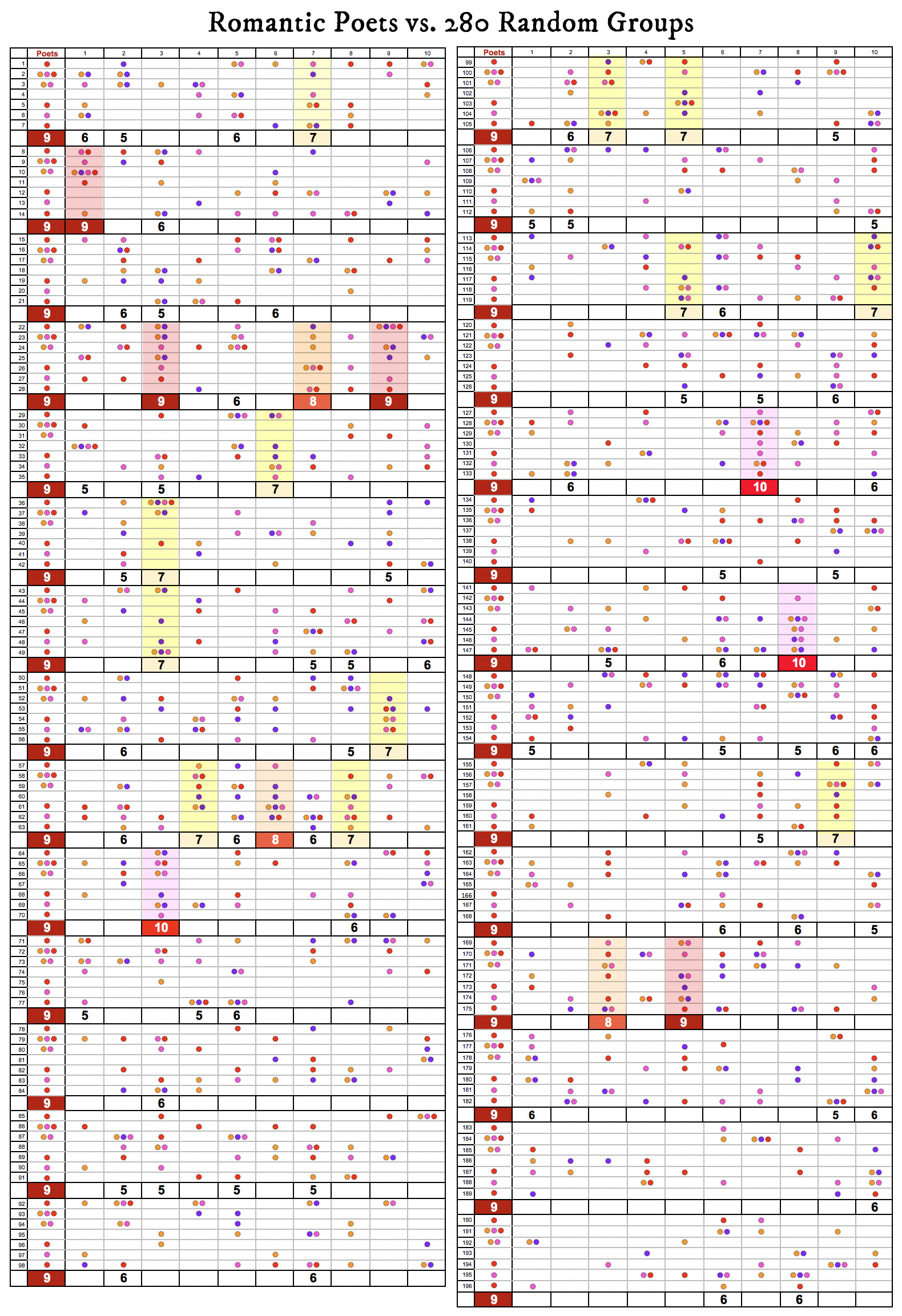
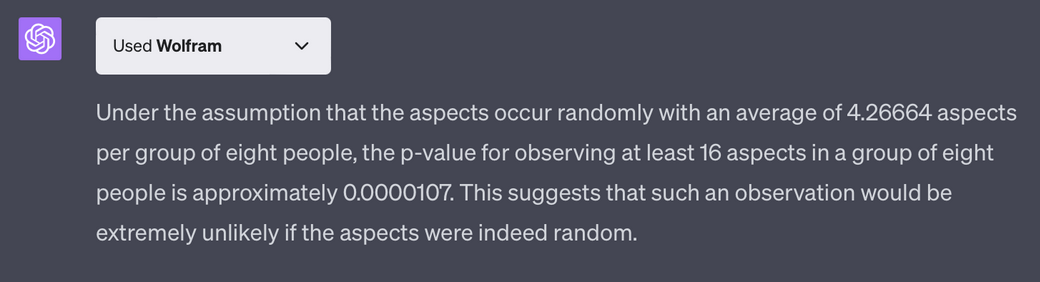
Since most of the material presented here is old, I am happy to start with something very recent. A person close to me put some data from my work into the ChatGPT Artificial Intelligence “app” and got this result where the p-value is a whooping 0.0000107. The data in question was aspects between Neptune and any or all of the Sun, Mercury, Venus, and Mars.
Since I can’t do any statistical calculations, I have had to rely on homemade “visual statistics”. The table below shows the aspects in the charts for Richard Dawkins and his fellow New Atheists, and another group of four added to the New Atheism page on Wikipedia.

Considering the lack of any random group with more the 11 aspects I am not surprised by something in the vicinity of p = 0.0000107.
It is a slightly difficult process to summarize eight years of work in a reasonably comprehensive way, to offer an understatement. As those of you invited via email know, I have lost a lot of the required abilities over the recent years, not least a fully useable memory. I have to use crutches like this to remember when I have created something and, even more importantly, where I have put it. Seek, and Thou Shalt Find, for most of the time.

By searching, I have found out that this very first Dawkins chart was created in August 2016. Why is this important (at least for me)? At that time, the only astrology software I had was a Windows program running on an XP laptop. This is funny!
Development of Windows XP began in the late 1990s under the codename “NEPTUNE“, built on the Windows NT kernel and explicitly intended for mainstream consumer use.


Richard Dawkins and his fellow New Atheist brothers will receive plenty of attention elsewhere, but this is what brought me into